Educational practice only. These units teach technique. They do not constitute a commercial repair service or a professional qualification.
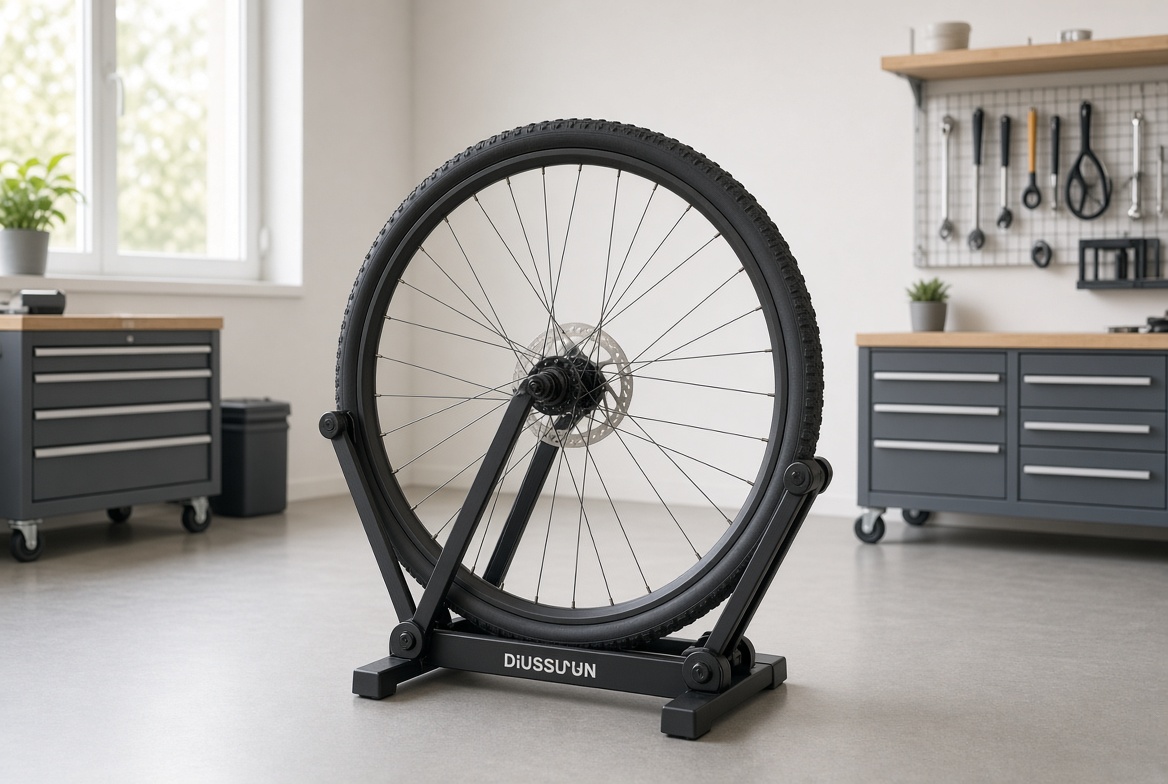
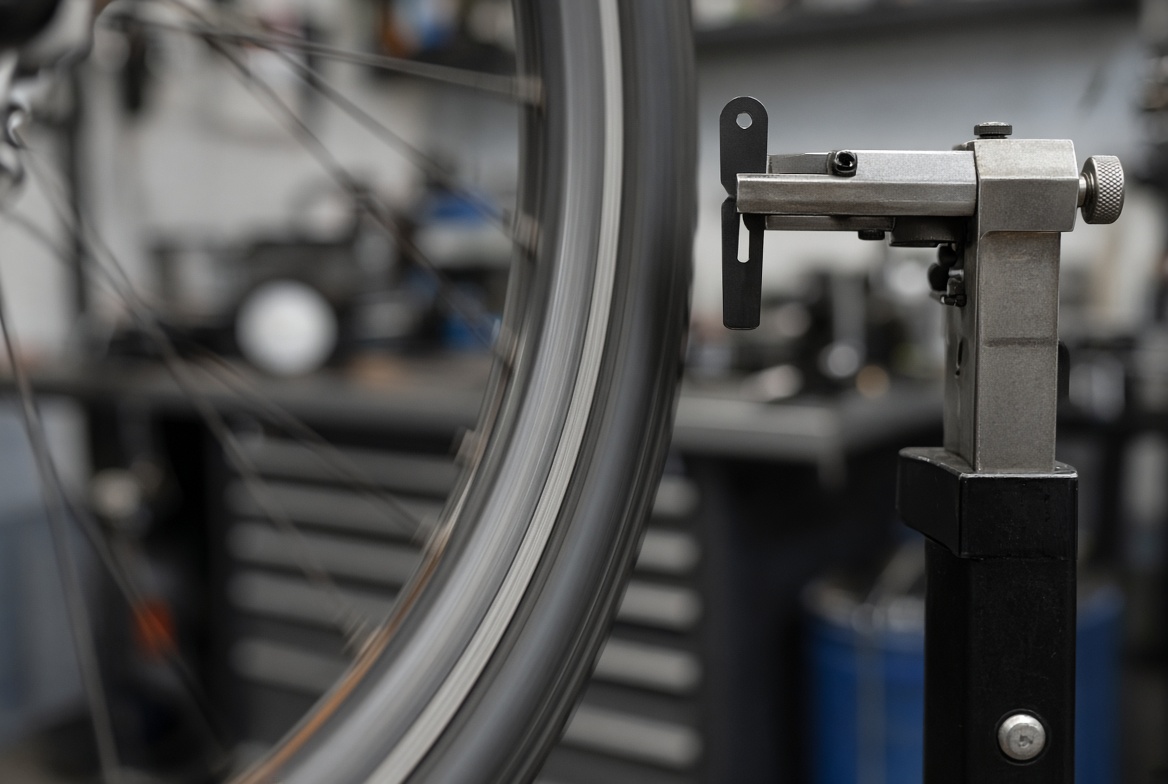
Rim passing truing stand indicator

Foundation · Sessions 40–60 min

01 — Reading deviation

Before any nipple is turned, the wheel must be described accurately: where the lateral high spots are, whether there is a radial hop, and how large the error is relative to the intended use of the wheel.

What you work on

Setting the stand indicators. Marking high and low sections with chalk or tape. Distinguishing a single side hop from a multi-spot weave. Deciding when a remaining error is acceptable for commuting versus when it is not.

How practice works

Scenarios give measured deviation patterns. You mark the high spots and state which spokes you would investigate first. Model answers show common mistakes such as adjusting the wrong side of the wheel.
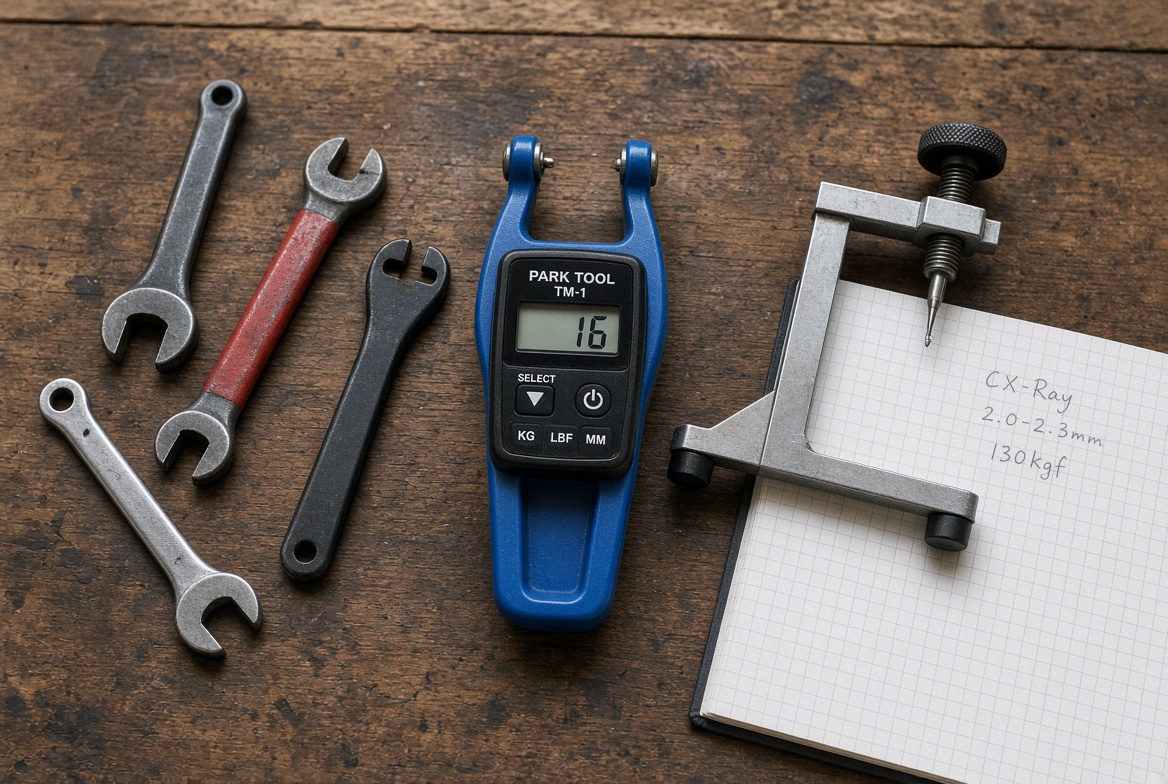
Tension meter and spoke wrenches on bench

Core skill · Sessions 50–70 min

02 — Spoke tension mapping

A true rim with uneven tension often returns to a hop after a few rides. This unit focuses on relative tension: finding the soft and hard spokes, and understanding why tension balance matters as much as rim position.

What you work on

Plucking or meter-reading every spoke in sequence. Recording a simple tension map. Identifying pairs that are far apart. Relating low-tension spokes to high spots that keep reappearing.

How practice works

You complete tension maps from scenario data, then propose which spokes to bring up or ease before further truing. Checklists mark maps that skip spokes or ignore drive-side versus non-drive-side differences on rear wheels.

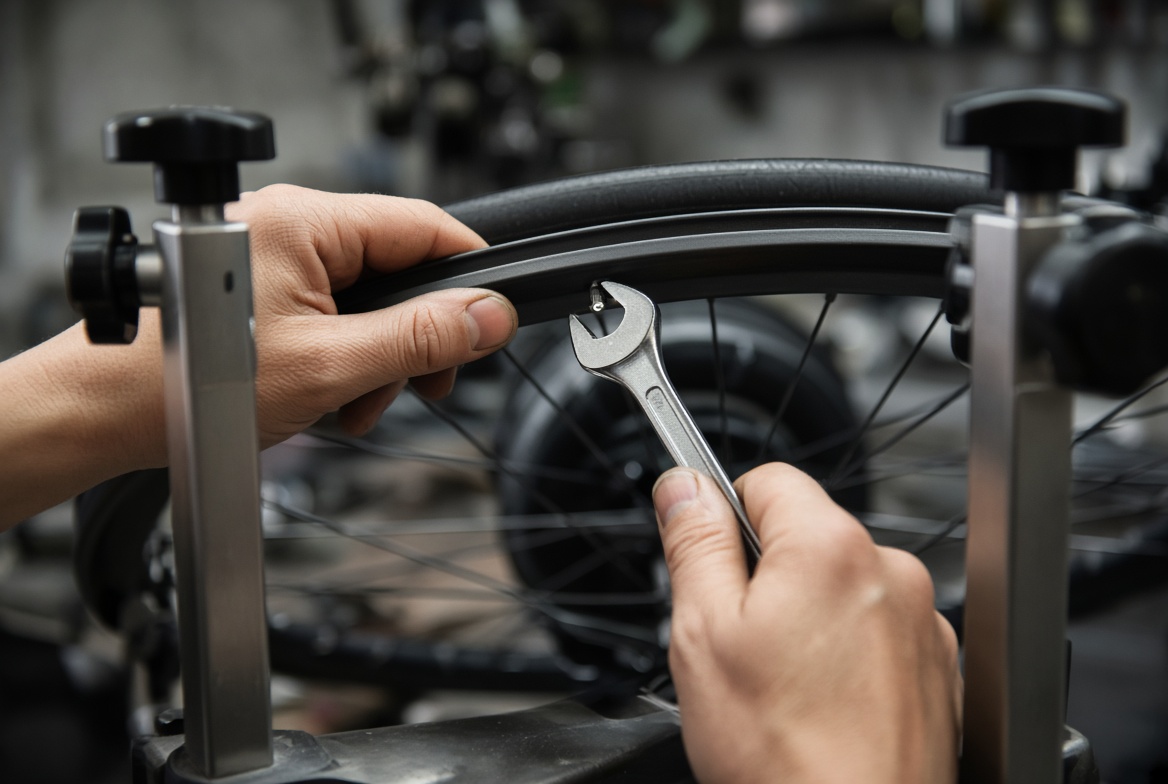
Adjusting nipple during side hop correction

Correction · Sessions 50–75 min

03 — Correcting a side hop

Lateral error is corrected by tightening spokes that pull the rim toward the low side and easing spokes that pull toward the high side — in small increments, with re-checks after each change.

What you work on

Choosing the control spokes for a marked high spot. Quarter-turn and half-turn discipline. Working around the hop rather than fixing one spoke only. Stopping when the indicator gap is acceptable.

How practice works

Step-by-step scenarios: after each proposed turn, the “rim” response is given. You decide the next move. Model sequences show how over-correction creates a hop on the opposite side.

Wheel on truing stand in workshop

Correction · Sessions 50–75 min

04 — Correcting a radial hop

Radial error (up-and-down hop) is often more stubborn. This unit covers when to tighten spokes under a high spot, when the rim itself may be the limit, and how radial work interacts with lateral true.

What you work on

Identifying a pure radial hop versus a combined lateral-radial fault. Adjusting groups of spokes under a high section. Re-checking lateral true after radial changes. Knowing when further radial correction is not realistic for a bent rim.

How practice works

Scenarios mix moderate radial hops with damaged-rim cases. You classify each as “correctable by tension” or “rim limit — true for lateral only.” Model answers emphasise honest limits rather than endless tightening.

Tools and notes for final stress relief

Finishing · Sessions 40–55 min

05 — Stress relief and final check

After the rim sits true, residual stress in the spokes can shift the wheel again. This unit covers stress-relieving methods, a final tension pass, and a last spin check before the wheel leaves the stand.

What you work on

Squeezing spoke pairs (safely) or other stress-relief techniques described in the materials. Re-mapping tension. Final lateral and radial check. A short written record of remaining error and average tension feel.

How practice works

You follow a finishing checklist on a scenario wheel that was “true” but uneven. The diagnostic sheet flags wheels released without stress relief or without a tension note.

Access and tools

Unit materials are provided after correspondence. A truing stand, spoke wrenches, and optionally a tension meter are the learner’s responsibility. Lipbab does not sell tools and does not take in wheels for commercial repair.